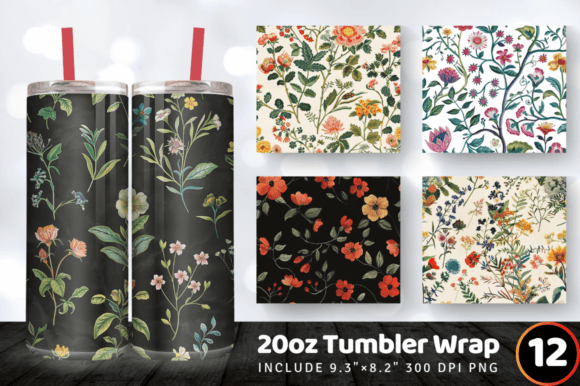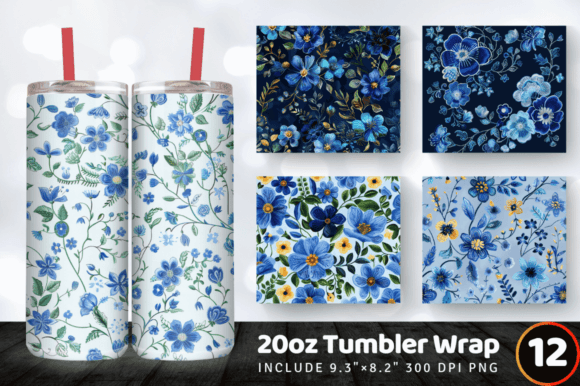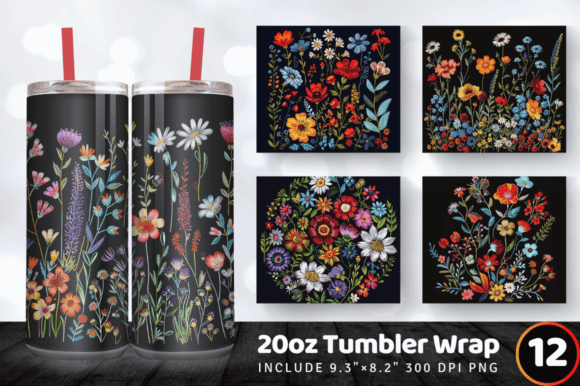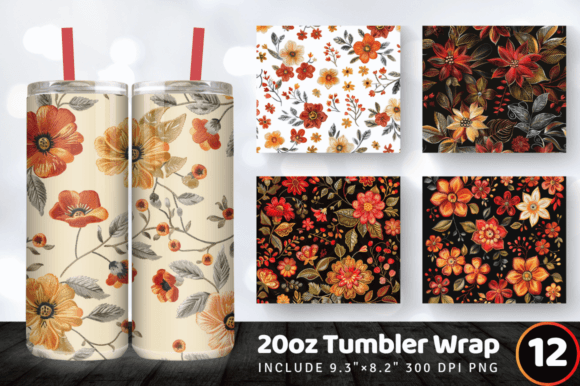
Botanical Embroidery Floral Tumbler Wrap: A Designer’s Review
As an experienced embroidery designer and product reviewer, I approach every new digital asset with a critical eye. We are not just looking for pretty pictures; we are looking for functional design elements that translate well into thread, fabric, and finished goods. Today, I am evaluating the Botanical Embroidery Floral Tumbler Wrap. While the title suggests a sublimation focus for 20 oz skinny tumblers, my interest lies in how this graphic translates to the tactile world of machine embroidery and handmade products.
First Impressions and Visual Mood
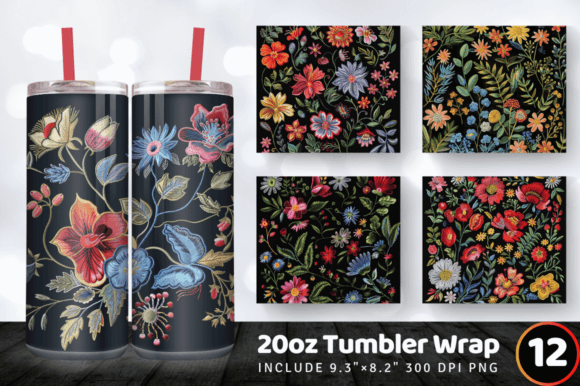
Upon opening the zip file, the first thing that strikes me is the organic flow of the botanical elements. The design carries a soft, natural mood that feels both modern and timeless. For an embroidery project, this is crucial. Designs that are too rigid or geometric can sometimes look stiff when stitched, but floral motifs with varying line weights tend to have more life. The layout appears balanced, offering enough negative space to let the stitches breathe while maintaining visual interest.
The theme is clearly nature-inspired, which remains a top seller for Etsy sellers and small shop owners. Whether you are creating a personalized gift or boutique branding material, this aesthetic appeals to a broad demographic. The visual personality is gentle yet confident, making it suitable for everything from baby embroidery to sophisticated home decor.
Translating Graphics to Stitched Reality
It is important to note that the product description specifies this is a Sublimation Design PNG intended for tumbler wraps. This means it is a raster image, not a native embroidery file like PES or DST. However, as creative entrepreneurs, we often use high-resolution graphics as references for digitizing or as applique templates. If you plan to use this Botanical Embroidery Floral Tumbler Wrap for actual stitching, you will need to digitize it or use it as a guide for an applique design.
In a real-life scenario, imagine preparing a custom embroidered tote bag for a spring craft fair. You want a design that stands out but does not overwhelm the fabric texture. Using this botanical graphic as a reference, you could create a satin stitch outline for the leaves and a fill stitch for the larger flower petals. The result would be a textured, high-value handmade product that feels premium to the touch. Customers reacting to such items often perceive them as higher quality than simple printed designs because of the dimensional aspect of the thread.
Practical Applications for Craft Businesses
This design concept is versatile. Here is how I see it performing in various commercial embroidery projects:
- Custom Apparel: Ideal for sweatshirt embroidery on the chest or back. The organic shapes complement the soft drape of cotton blends.
- Tote Bag Design: A large-scale version of this botanical motif can serve as a focal point on canvas bags, appealing to eco-conscious buyers.
- Baby Embroidery: Softened color palettes derived from this graphic work beautifully on onesies or nursery decor, providing a gentle, calming aesthetic.
- Embroidered Patch: If digitized correctly, this could become a striking iron-on patch, adding value to jackets or hats without permanent alteration.
- Holiday Embroidery: With minor adjustments to thread colors, this botanical theme can transition into autumn or spring holiday gifts effortlessly.
For digital product sellers, this graphic can also serve as a base for printable mockups. Showing your customers how a design might look on a tumbler or a tote helps build trust and increases buyer engagement. It allows them to visualize the finished product before purchasing.
Technical Considerations and Caution Areas
While the visual appeal is strong, there are technical challenges to consider when moving from a PNG graphic to a stitched reality. Since this is provided as a high-resolution PNG for sublimation, you must be cautious about detail level. Tiny details in the original graphic may not hold up well in stitch form, especially on textured fabrics or stretchy fabric like jersey knits.
If you are digitizing this yourself, pay close attention to stitch density. Dense stitch areas can cause puckering, particularly on thin fabric or curved surfaces like caps. I recommend using a proper stabilizer—cut-away for stretchy materials and tear-away for stable wovens. Additionally, test the design on scrap fabric first. Check thread color contrast to ensure the botanical elements do not blend into the background. A black and white mockup test can reveal if the design has enough contrast to be readable from a distance.
Be mindful of small hoop sizes. If you attempt to shrink this design too much for a petite item, the intricate lines may merge, losing the clarity that makes the design attractive. Always confirm hoop size compatibility with your machine before starting a large batch of custom apparel or small shop products.
Enhancing Brand Consistency and Value
Using consistent design assets like the Botanical Embroidery Floral Tumbler Wrap across your product line helps build brand recognition. If you sell both sublimated tumblers and embroidered textiles, using similar botanical themes creates a cohesive look. This professionalism boosts customer trust and encourages repeat business. Buyers are more likely to engage with a shop that presents a unified aesthetic rather than a disjointed collection of random designs.
Furthermore, handmade products featuring well-executed botanical motifs often command higher prices. The perceived effort and artistry involved in embroidery add value that mass-produced items lack. By carefully selecting and adapting high-quality graphics, you elevate your craft business from a hobby to a professional enterprise.
Final Designer Notes
Before integrating this design into your workflow, remember to check the licensing terms. Since this is a digital download template, confirm whether it allows for commercial use of finished items. Some licenses permit selling physical goods made with the design but restrict reselling the digital file itself. Always clarify this to protect your small business.
Also, verify the resolution of the PNG. For sublimation, high resolution is key to avoiding pixelation. For embroidery reference, clear lines are essential for accurate digitizing. If you are not digitizing yourself, consider hiring a professional digitizer to convert this graphic into a proper embroidery file, ensuring optimal stitch types like running stitch for outlines and satin stitch for borders.
In conclusion, the Botanical Embroidery Floral Tumbler Wrap offers a beautiful foundation for creative projects. Whether used directly for sublimation on Tumbler Wraps or adapted into a machine embroidery design for apparel and home goods, its natural elegance and versatility make it a valuable asset for any designer’s toolkit. With careful attention to technical details and fabric choices, this graphic can help you create stunning, marketable products that resonate with customers.