Botanical Embroidery Tumbler Wrap: A Designer’s Review
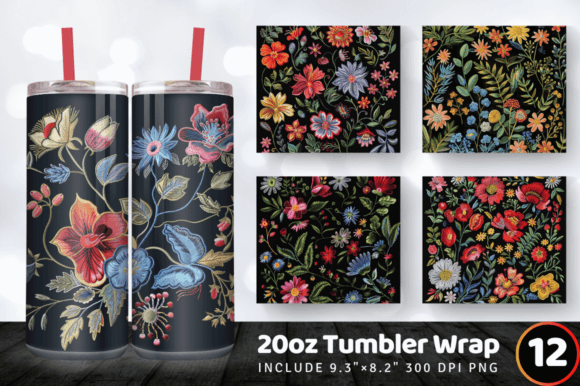
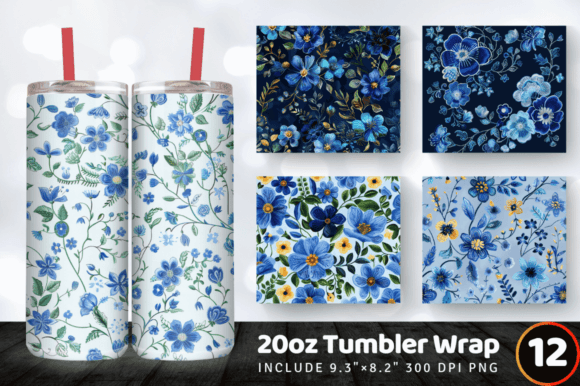
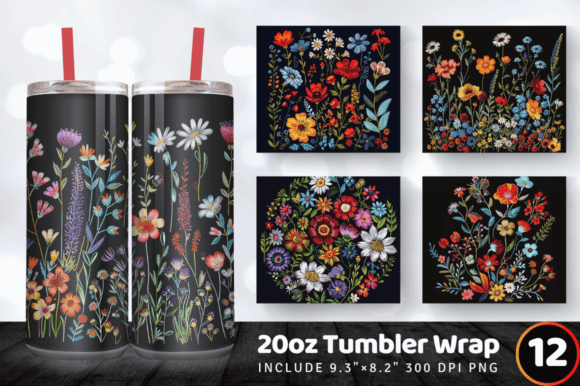
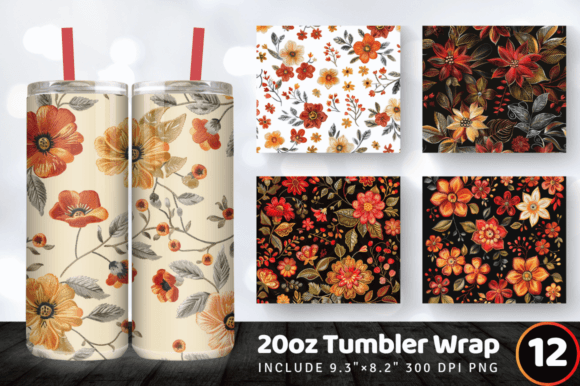
As an embroidery designer who has spent years digitizing patterns and reviewing assets for small business owners, I approach every new file with a critical eye. We are not just looking for pretty pictures; we are looking for stitchability, commercial viability, and aesthetic longevity. Recently, I evaluated the Botanical Embroidery Tumbler Wrap, a digital asset marketed primarily as a sublimation design for 20 oz skinny tumbler wraps. While its primary category is listed under Tumbler Wraps and Graphics, my interest lay in translating this visual concept into tangible textile applications. Can a design meant for straight-wall sublimation translate effectively into a high-quality machine embroidery design for custom apparel and home goods? The answer requires a nuanced look at layout, detail, and fabric interaction.
First Impressions: Mood and Visual Personality
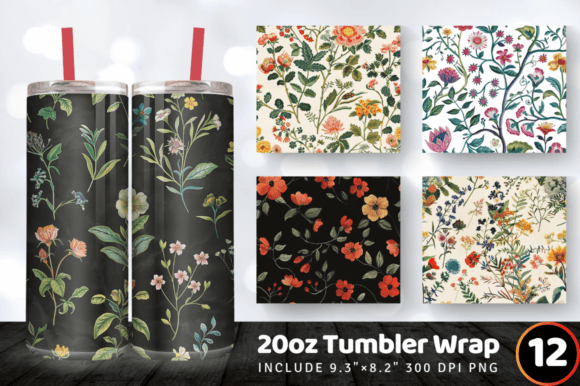
The first thing that strikes you about the Botanical Embroidery Tumbler Wrap is its organic flow. The botanical theme suggests tranquility, nature, and softness—qualities that resonate deeply with current trends in handmade products. Unlike geometric or rigid corporate logos, this design relies on the natural irregularity of leaves and stems. For an embroidery project, this is both a blessing and a challenge. The mood it creates is one of understated elegance, suitable for boutique branding rather than loud, attention-grabbing streetwear.
When viewing the high-resolution PNG provided in the zip file, the clarity is evident. However, as designers, we know that a crisp pixel does not always equal a clean stitch. The layout is designed for a "straight wall," which implies a linear, horizontal progression. This is crucial for planning your hoop placement. If you are adapting this for a curved surface like a cap or a rounded pillow cover, you must account for distortion. The visual personality is delicate, meaning it thrives on negative space. It does not scream for attention; it invites closer inspection.
Real-World Application: From Digital File to Finished Product
To test the versatility of this asset, I imagined a real-life scenario involving a local craft fair preparation. A client wanted a cohesive line of spring-themed items. While the original file is a digital download template for sublimation, the botanical motifs are ideal for conversion into embroidery. I visualized this design on a linen tote bag. The horizontal spread of the botanical elements would wrap beautifully around the center of the bag, acting as a subtle band rather than a central focal point. This approach elevates a simple tote bag design into a premium handmade product.
Beyond bags, consider sweatshirt embroidery. Placing this botanical strip across the chest or along the sleeve cuff could create a sophisticated, custom look. For baby embroidery, the soft lines work well on muslin swaddles or bibs, provided the scale is reduced appropriately. The key here is adaptation. Since the product description specifies it is a PNG for sublimation, you would need to use software to trace or convert these graphics into an embroidery file compatible with your machine. This step allows you to control the stitch density and choose between satin stitch for outlines and fill stitch for broader leaf areas.
Navigating Technical Challenges
Using a graphic originally intended for printing on a tumbler for textile embroidery requires careful technical consideration. Here are specific areas where caution is needed:
- Fabric Texture: Delicate botanical details can get lost on coarse fabrics like burlap or heavy canvas. This design performs best on smooth cotton, linen, or fine polyester blends where the needle can penetrate cleanly without dragging fibers.
- Stitch Density: If converting this PNG to an embroidery format, avoid over-digitizing. High stitch density in thin leaf areas can cause puckering, especially on stretchy fabrics like t-shirt jersey. Use a cut-away stabilizer for knits to maintain shape.
- Small Details: Tiny stems or leaf tips may require running stitch rather than satin to prevent thread breaks. Test these micro-details on scrap fabric before committing to the final finished product.
- Curved Surfaces: While the design is for straight walls, applying it to a cap or curved mug cozy requires splitting the design or adjusting the pull compensation to prevent distortion during stitching.
Enhancing Brand Value and Customer Trust
For Etsy sellers and small shop product creators, consistency is key. The Botanical Embroidery Tumbler Wrap offers a versatile aesthetic that can unify a brand’s visual identity. When customers see the same botanical motif on a personalized gift like a kitchen towel and a matching embroidered patch, it builds recognition and trust. It signals professionalism and attention to detail.
Moreover, the perceived value of embroidered goods often exceeds that of printed ones. By taking this digital asset and transforming it into thread, you add tactile depth. A holiday embroidery project using these botanicals can feel more luxurious than a standard print. This tactile quality drives buyer engagement and justifies higher price points in your craft business. It transforms a simple design asset into a conversation piece.
Practical Designer Notes for Implementation
Before launching this design into your production line, follow these practical steps to ensure quality:
- Test on Scrap Fabric: Always run a test stitch-out. Check for thread breaks in tight corners and ensure the thread colors contrast sufficiently with the fabric background.
- Check Licensing: The product is sold as a digital download for sublimation. Verify if the creator allows derivative works for embroidery. If you plan to sell commercial embroidery items, ensure you have the right to use the converted design in finished goods.
- Mockup Verification: Create black and white mockups to check value contrast. Ensure the design remains legible when stitched in monochrome, which is common for classic custom apparel.
- Hoop Size Confirmation: Measure the dimensions of the PNG against your available hoop sizes. You may need to resize the design, but be wary of making it too small, which can compromise stitch integrity.
In conclusion, while the Botanical Embroidery Tumbler Wrap is marketed as a sublimation graphic for Tumbler Wraps, its artistic merit extends far beyond drinkware. For the savvy designer, it represents a flexible foundation for creating high-end textile goods. By respecting the technical limitations of embroidery and leveraging the design’s natural elegance, you can produce standout items for your small business merchandise or personal collection. It is a reminder that in the world of digital embroidery file creation, vision and technical precision must go hand in hand.